

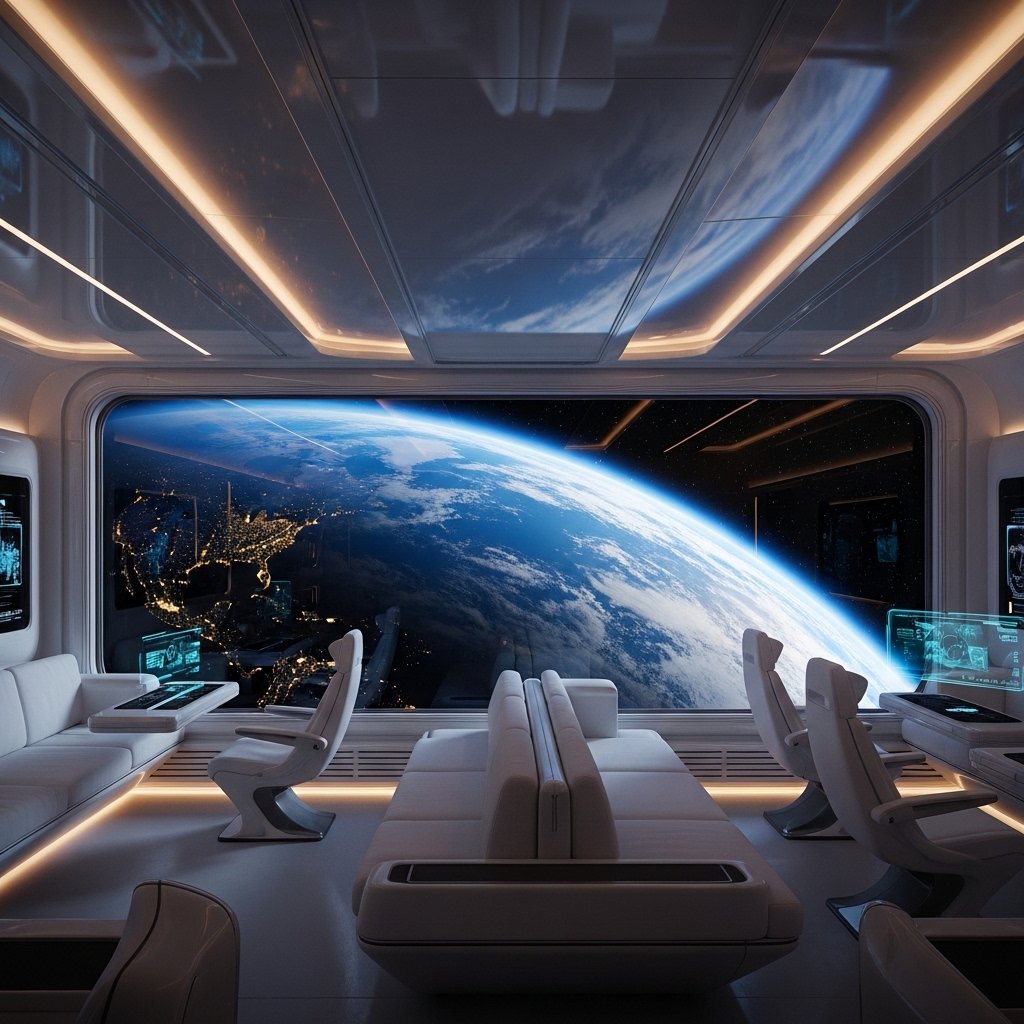
For decades, the silent vacuum of space was a territory reserved exclusively for government-funded astronauts and the occasional multi-billionaire. However, as we move through 2026, the “Space Race” has shifted from a battle of nations to a booming commercial industry. With the successful launch of several orbital hotels and the increased frequency of suborbital flights, the question is no longer if humans will vacation in space, but when the prices will drop enough for the middle class to join the journey.
The Rise of the Orbital Hotel
One of the most significant milestones of 2026 is the completion of the first “Modular Space Hotel.” Unlike the International Space Station (ISS), which was built for research, these new structures are designed for comfort. They feature large, reinforced windows that provide a 360-degree view of the Earth, private sleeping pods, and even “Zero-G Gyms” where tourists can experience the physical freedom of weightlessness.
Companies like SpaceX and Orbital Assembly have pioneered the use of centrifugal force to create “Artificial Gravity” in certain sections of these hotels. This allows guests to eat and sleep in a 1.0G environment while still having access to zero-gravity lounges for recreation. This technological leap has solved one of the biggest barriers to space tourism: the physical discomfort and “space sickness” that many untrained civilians experience in total microgravity.
Point-to-Point Suborbital Travel: The New Aviation
While staying in a space hotel is the ultimate luxury, the real economic revolution in 2026 is “Point-to-Point” (P2P) suborbital travel. Using hypersonic rockets that briefly exit the Earth’s atmosphere, airlines are now testing flights that can transport passengers from New York to Shanghai in less than 40 minutes.
This technology utilizes the vacuum of space to eliminate air resistance, allowing vehicles to travel at speeds exceeding Mach 15. Although currently restricted to high-end business travel and emergency logistics, the infrastructure being built today is laying the groundwork for a future where long-haul international flights are replaced by suborbital hops. The “Spaceport” is slowly becoming as common as the international airport.
The Environmental and Ethical Debate
With every technological leap comes a set of challenges. The environmental impact of frequent rocket launches is a major topic of debate in 2026. Critics point to the carbon emissions and the accumulation of “Space Junk” in Low Earth Orbit (LEO). In response, the industry has shifted toward “Green Hydrogen” fuel and reusable rocket stages that leave zero debris behind.
Furthermore, the ethics of space tourism are being questioned. As millions of dollars are spent on 10-minute joyrides into the thermosphere, many argue that these resources should be directed toward solving climate change on Earth. However, proponents of the industry argue that the “Overview Effect”—the profound shift in perspective that astronauts experience when seeing Earth from space—could be the very thing that inspires a global movement to protect our home planet.
Conclusion: From Science Fiction to Reality
Space tourism in 2026 is at the same stage as commercial aviation was in the 1920s—expensive, daring, and rapidly evolving. We are witnessing the birth of a multi-planetary civilization. For the followers of OviTech, the message is clear: the boundaries of human reach are expanding faster than ever. The stars are no longer just points of light in the sky; they are destinations.