

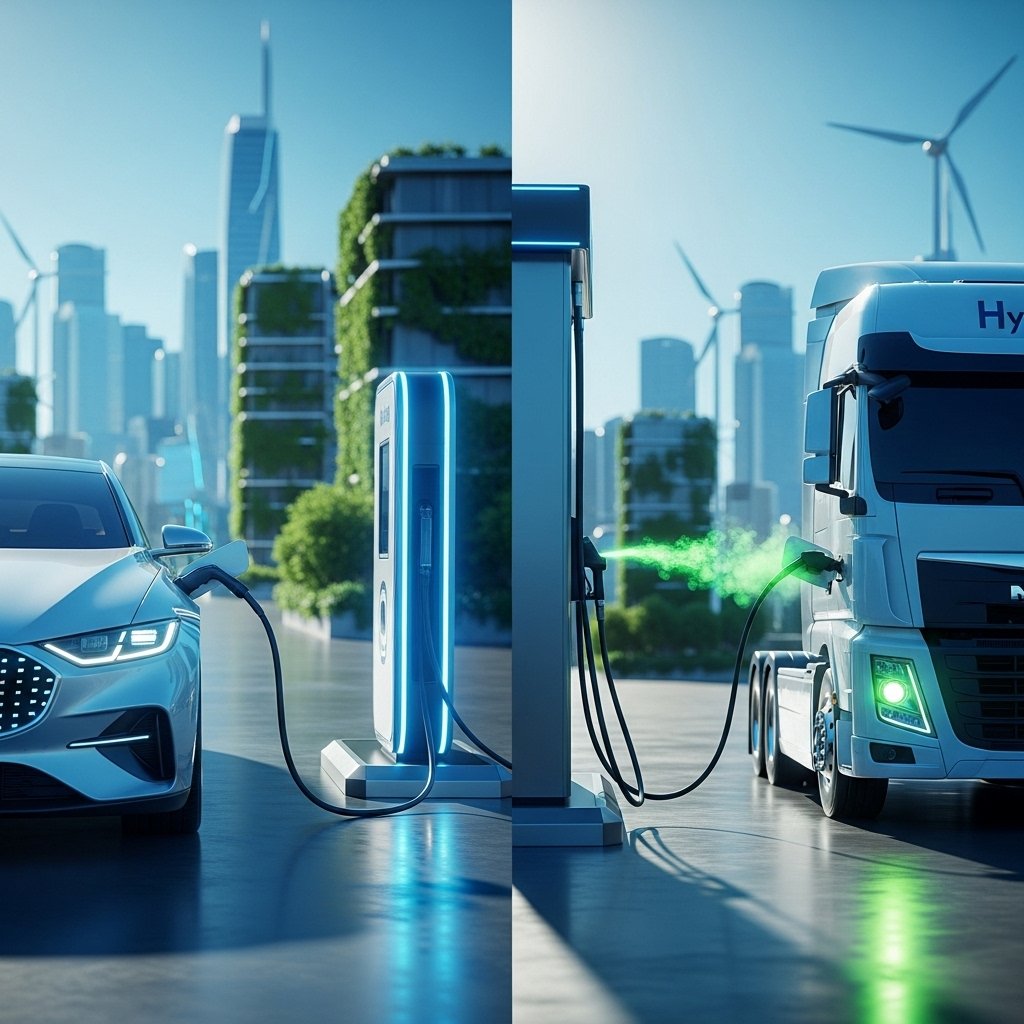
The automotive industry has reached a historic crossroads. For the past decade, Battery Electric Vehicles (BEVs) have dominated the conversation about green transportation. However, as we move through 2026, a powerful challenger has matured: Hydrogen Fuel Cell technology. The debate is no longer about whether we will stop using gasoline, but rather which sustainable fuel will power the long-haul trucks and family SUVs of the future.
The Reign of Battery Electric Vehicles (BEVs)
Electric cars have benefited from massive infrastructure investment. In 2026, solid-state batteries have finally entered mass production, solving two of the biggest complaints of early adopters: range anxiety and slow charging times. These new batteries allow for a 1,000-kilometer range on a single charge and can reach 80% capacity in less than ten minutes.
Getty Images
Explore
The efficiency of the electric drivetrain remains its strongest advantage. Converting electricity directly into motion through a battery is nearly 90% efficient, making it the most cost-effective solution for city commuting and short-distance travel.
The Hydrogen Comeback: Powering the Giants
While batteries win in the city, Hydrogen is winning the battle for heavy-duty transport. In 2026, we are seeing a massive rollout of hydrogen-powered semi-trucks, ships, and even regional aircraft. The primary advantage of hydrogen is energy density and refueling speed. A long-haul truck can refuel its hydrogen tanks in the same amount of time it takes to fill a diesel tank, providing a significant edge for logistics companies where every minute counts.
Furthermore, hydrogen fuel cells perform better in extreme cold or heat, environments where traditional batteries often struggle to maintain their efficiency. This makes hydrogen the preferred choice for industrial applications in harsh climates.
Infrastructure: The Final Hurdle
The winner of this race will likely be determined by infrastructure rather than the vehicles themselves. While charging stations for electric cars are now as common as gas stations, the network of hydrogen refueling points is still in its early stages, primarily concentrated along major shipping corridors. However, decentralized green hydrogen production—using solar and wind to create fuel on-site—is beginning to close this gap.
Conclusion: A Multi-Fuel Future
As we look toward the end of the decade, it is becoming clear that the future is not a “one size fits all” solution. Electric batteries are perfect for personal cars and urban environments, while hydrogen is the logical successor for heavy industry and long-distance logistics. For the consumer in 2026, the choice depends entirely on how and where they drive. The era of oil is ending, and the era of diverse, clean energy has truly begun.